
Salajeet for Diabetes — Blood Sugar, Insulin Sensitivity & the Safety Facts (Diabetes mein Salajeet)
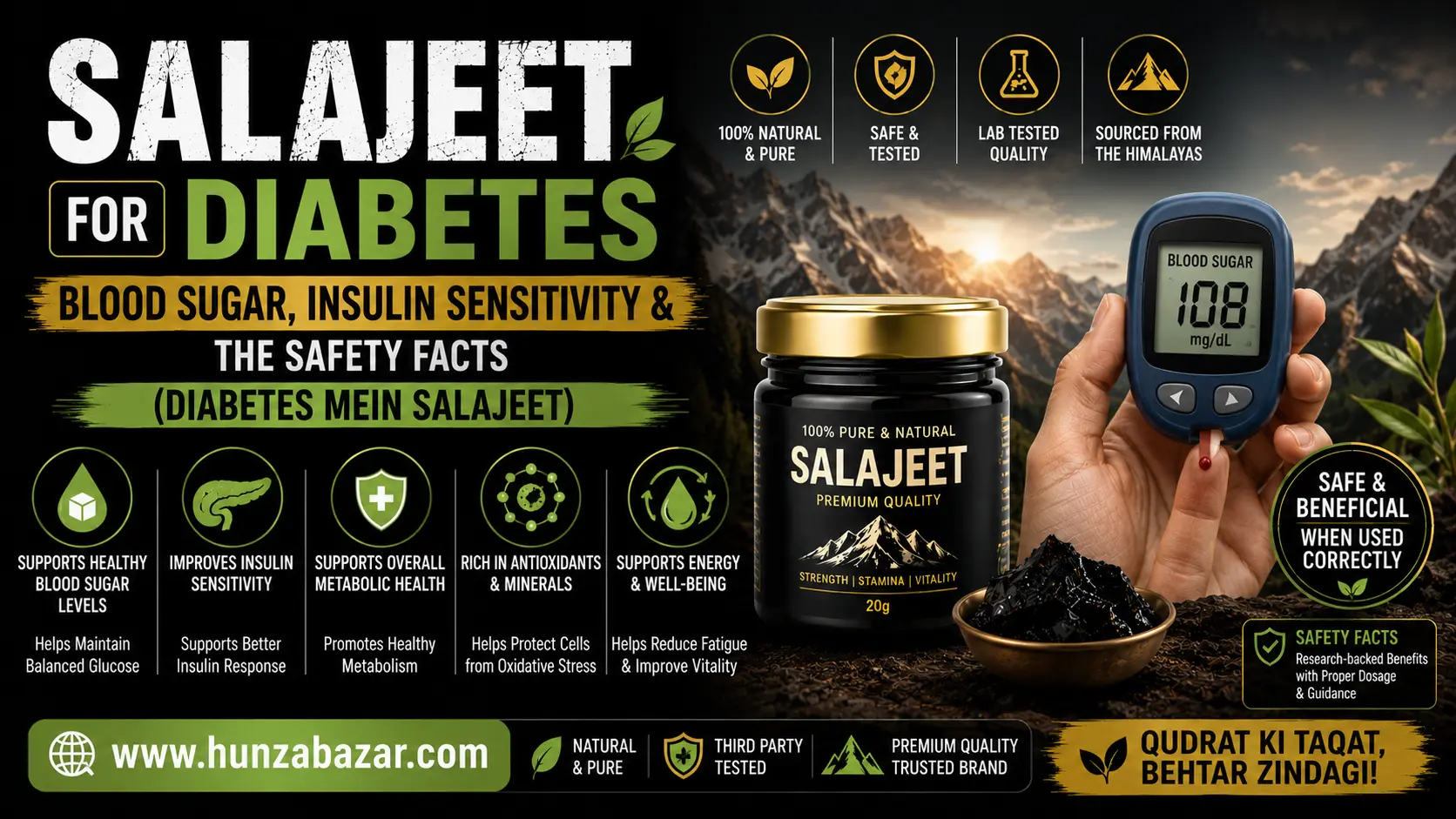
Diabetes is now Pakistan's quiet emergency, and many people understandably look for natural support to add to their treatment. Salajeet (shilajit) is one of the names that comes up most. As a Gilgit-Baltistan team that sources salajeet at its origin, our job here is to be honest and careful — because diabetes is exactly the kind of condition where bad advice causes real harm. Here's what the blood-sugar research actually shows, and the safety rules that matter more than any benefit. This is the diabetes chapter of our complete salajeet guid 2026.
Quick answer: Early research suggests salajeet's fulvic acid may improve insulin sensitivity and modestly lower blood sugar. But salajeet is not a treatment or cure for diabetes. Because it can lower blood sugar — and adds to the effect of diabetes medicines — using it without a doctor can cause dangerously low blood sugar. Only use it with medical approval and monitoring.
⚠️ Read this first: If you take diabetes medication or insulin, do not start salajeet on your own. It can push your blood sugar dangerously low. Talk to your doctor before doing anything.
Diabetes in Pakistan — Why So Many Look for Natural Help
The scale is staggering. Pakistan now has the highest diabetes prevalence in the world — about 31.4% of adults, or roughly 34.5 million people in 2024, according to the International Diabetes Federation. Around 230,000 Pakistanis die each year from diabetes-related complications.
With numbers like that, it's no surprise people search for qudrati (natural) help. But "natural" does not mean "a substitute for treatment." Diabetes damages the heart, kidneys, eyes and nerves when poorly controlled — so anything you add must support, never replace, proper medical care.
Fulvic Acid & Blood Sugar — What the Research Actually Shows
There is some early evidence, and it's worth knowing honestly. In a small randomised study of people with type 2 diabetes, taking shilajit twice daily for 12 weeks was linked to a meaningful drop in fasting and after-meal blood sugar. Animal studies show similar blood-sugar-lowering patterns.
The proposed mechanism is reasonable: salajeet's fulvic acid may improve insulin sensitivity, its antioxidant action may protect insulin-producing cells from oxidative stress, and minerals like magnesium and chromium are natural cofactors for insulin and glucose metabolism.
The honest caveat is big, though: these studies are small and short-term. Larger, longer human trials are needed before anyone can call salajeet a reliable blood-sugar tool. Promising is not the same as proven.
⚠️ The Critical Safety Rule — Alongside Medicine, Never Instead
This is the most important part of this article, so please read it slowly. Salajeet may lower blood sugar — and research shows it can add to the effect of diabetes medicines like metformin, sulfonylureas (such as glibenclamide) and insulin.
That sounds helpful, but it's actually the main danger: combining them without supervision can push your blood sugar too low — hypoglycemia — which can be serious or even an emergency. So the rules are simple and firm:
- Never stop or reduce your prescribed diabetes medicine to take salajeet.
- Never add salajeet to your routine without telling your doctor first.
- If you use it with medical approval, monitor your blood sugar closely.
The full picture is in our guide on salajeet and drug interactions.
Salajeet Is Not a Cure — Honest Expectations
Let's be clear: diabetes has no cure, and salajeet is not a treatment for it. It will not replace your medicine or insulin, and it cannot "reverse" diabetes on its own.
At best, with a doctor's guidance, it may be a small complementary support — but the things that actually control diabetes remain the same: your prescribed treatment, a sensible diet, weight and activity, and regular monitoring. Salajeet in ki jagah nahi le sakti.
If Your Doctor Approves — Using It Safely
If — and only if — your doctor okays it, use salajeet cautiously. Start with a small amount (the usual range is 300–500 mg a day, but your doctor may suggest less), take it with food, and check your blood sugar more often than usual at first. Our dose guide explains amounts.
Know the warning signs of low blood sugar so you can act fast: shaking, sweating, dizziness, a racing heart, sudden hunger, confusion or weakness. If these appear, treat the low and contact your doctor. See also our guide to salajeet's side effects.
Who Should Not Use It
Beyond the medication cautions above, avoid salajeet entirely if you're pregnant, breastfeeding, or under 18. People with other conditions — kidney disease, iron overload — should also check first. And never use salajeet as a do-it-yourself diabetes treatment. Our full list is in who should not take salajeet. Raw, untested salajeet can also carry heavy metals, so purity is essential.
Conclusion
Salajeet's blood-sugar research is genuinely interesting, but diabetes is not the place for guesswork. The honest takeaway: it is not a cure, it is not a replacement for your medicine, and on its own it can be risky for anyone on diabetes treatment. If you're curious, the right first step is a conversation with your doctor — not a purchase. You can read more across our salajeet guides. Apni diabetes ki dawai kabhi band na karein — pehle doctor se zaroor poochein.
Frequently Asked Questions
Can salajeet cure diabetes?
Does salajeet lower blood sugar?
Kya diabetes (shakar) mein salajeet le sakte hain?
Can I take salajeet with metformin or insulin?
What is a safe salajeet dose for someone with diabetes?
What are the signs of low blood sugar to watch for?
Share this post:


