
Fulvic Acid Kya Hai? — The Science of Salajeet's Key Compound
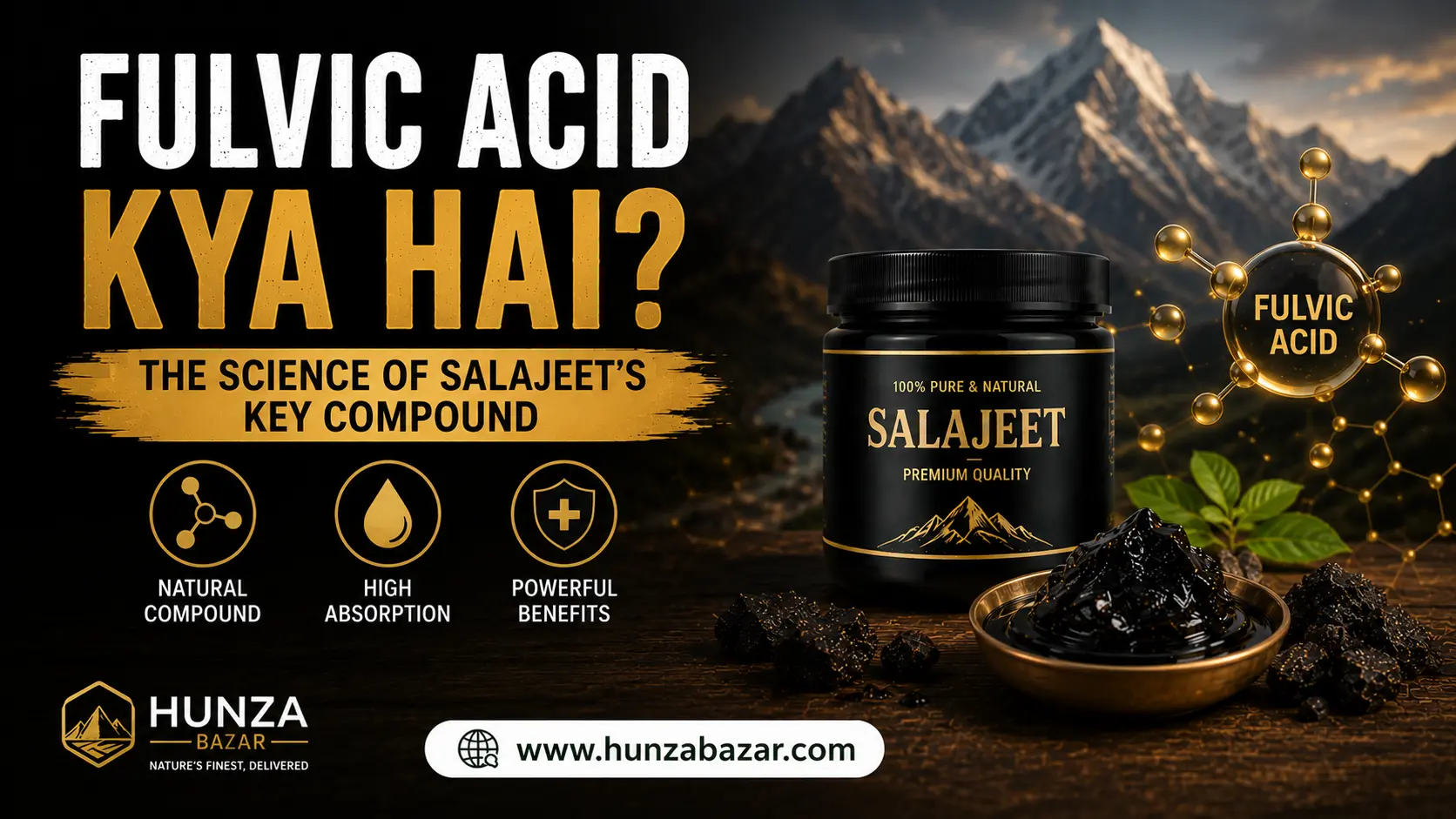
Salajeet owes much of its power to a single compound: fulvic acid. You'll see it named on every label and in every benefit list — but what is it, and why does it matter so much? In truth, fulvic acid is what makes salajeet more than just a pile of minerals. As a Gilgit-Baltistan team that lab-tests its salajeet, here's the real science — explained simply. This is the fulvic-acid chapter of our complete salajeet guide.
Quick answer: Fulvic acid is a tiny, natural organic compound found in salajeet, formed over centuries from decomposed plant matter. Its very small molecular size lets it slip into your cells, carrying minerals in and waste out, while acting as a powerful antioxidant. It's the main reason salajeet's minerals are so well absorbed — and its level is a key marker of quality.
What Is Fulvic Acid?
Fulvic acid is a humic substance — specifically, the smallest and most active of the organic compounds that form when plant and organic matter slowly decomposes over time. In salajeet, it sits alongside humic acid and dozens of trace minerals as one of the main active components.
What sets it apart is its size. Scientifically, fulvic acid has a very low molecular weight — often around 500 to 2,000 daltons — and dissolves in water at every pH level. That small size, as you'll see, is the secret to everything it does.
The Tiny Molecule That Slips Into Your Cells
Here's the key idea. Because fulvic acid molecules are so small, they can cross cell membranes and enter your cells directly — something larger molecules simply can't do.
Picture it this way: if humic acid is a beach ball that can't fit through a doorway, fulvic acid is a golf ball that slips straight through. This ability to get inside cells is what makes fulvic acid such an effective delivery system — it works at the cellular level, where it counts most.
Nature's Mineral Delivery System
This is fulvic acid's headline job. It acts as a natural chelator — meaning it binds to minerals like iron, zinc, magnesium and calcium, then carries them across cell membranes into your cells, where they can actually be used.
Salajeet contains 80+ trace minerals, and fulvic acid is largely why they're so absorbable — think of it as a delivery truck for nutrients. This isn't marketing language; the ability of fulvic acid to chelate minerals and ferry them into cells is well-documented biochemistry. It's a big part of why salajeet's minerals absorb better than those in a typical multivitamin (more on that in our benefits guide).
A Powerful, Versatile Antioxidant
Fulvic acid is also a remarkable antioxidant — and an unusual one. Most antioxidants only donate electrons, but fulvic acid can both donate and accept electrons depending on what the body needs, making it more versatile than vitamins C or E.
In practice, this means it can neutralise free radicals — the unstable molecules linked to ageing, fatigue and cell damage — and help reduce oxidative stress throughout the body. This antioxidant action is one of the core mechanisms behind many of salajeet's benefits.
Humic vs Fulvic Acid — What's the Difference?
Both come from the same decomposition process, but their size gives them very different jobs:
| Property | Humic acid | Fulvic acid |
|---|---|---|
| Molecular size | Large (heavy) | Small (light) |
| Colour | Dark brown to black | Golden to light brown |
| Dissolves at | Alkaline pH only | All pH levels |
| Enters cells? | No — works in the gut | Yes — enters cells |
| Main role | Binder & protector | Mineral delivery |
The simple way to remember it: humic acid is the warehouse; fulvic acid is the delivery driver that actually gets nutrients into your cells.
What Else Fulvic Acid Does
Beyond minerals and antioxidants, research suggests fulvic acid may also support:
- Gut health — acting as a natural pH buffer and supporting the digestive environment.
- Detoxification — binding to heavy metals and toxins to help carry them out of cells.
- Cellular energy — assisting mitochondria, your cells' energy factories, in producing ATP.
- Electrolyte balance — behaving as a natural electrolyte that supports hydration at the cell level.
Honesty note: many of these areas are still emerging research rather than fully settled science, so they're best read as promising mechanisms, not guarantees.
Why Fulvic Acid % Is the Quality Marker
Because fulvic acid drives so much of salajeet's activity, its genuine content is a key indicator of potency — more real fulvic acid means more of what makes salajeet work.
But here's the honest part: fulvic levels vary by source and even by batch, a single percentage printed on a label can be misleading, and reliably documented levels sit in a moderate range — any product claiming 70%+ fulvic acid should raise suspicion. The only way to truly know is a batch-specific lab report, which is exactly what proper lab testing provides.
Why Aftabi Salajeet Retains More Fulvic Acid
One last, important point: fulvic acid is heat-sensitive. High-heat processing — used to dry many cheap salajeet products quickly — can degrade it, lowering the very compound you're paying for.
The traditional Aftabi method dries salajeet gently in natural sunlight, at low temperatures, which helps preserve more of its fulvic acid. This is why how salajeet is processed matters just as much as where it comes from — and why our Aftabi salajeet is made this way. Learn more in our Aftabi benefits guide.
Conclusion
Fulvic acid is the quiet engine behind salajeet: a tiny molecule that slips into your cells, delivers minerals where they're needed, and mops up free radicals along the way. It's why salajeet's minerals are so absorbable, and why its genuine fulvic content — confirmed by a batch lab report — is such a meaningful sign of quality. Just remember that fulvic acid is fragile, so gentle processing like the Aftabi method matters. Explore our lab-tested pure salajeet range. Fulvic acid hi salajeet ki asal taqat hai.
Frequently Asked Questions
Fulvic acid kya hai?
What does fulvic acid do in the body?
Humic vs fulvic acid kya farq hai?
What is a good fulvic acid percentage in shilajit?
Is fulvic acid the same as shilajit?
Is fulvic acid safe?
Share this post:


