
Salajeet for Skin & Anti-Aging — Khoobsurati ke Liye Shilajit (Honest Guide)
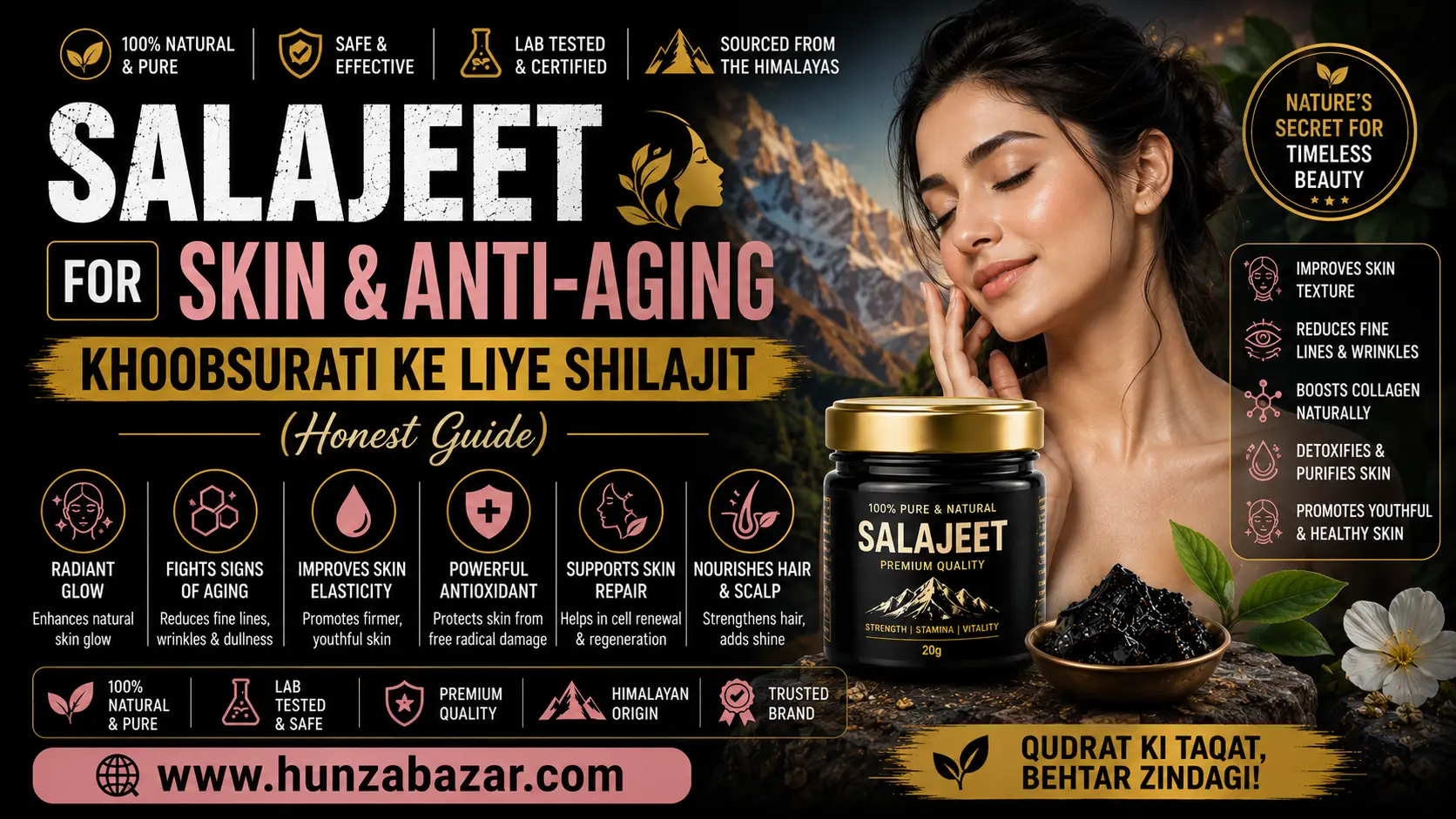
Glowing skin and slowing the signs of aging are at the top of every beauty wishlist, and Pakistani women are increasingly reaching for natural options instead of endless products. Salajeet (shilajit) is one name that keeps coming up. As a Gilgit-Baltistan team that sources salajeet at its origin, we'll give you the honest version — including one common mistake to fix first, what the skin research really shows, and realistic timelines. This is the skin chapter of our complete salajeet guide.
Quick answer: Salajeet may support skin from the inside — its fulvic-acid antioxidants fight the oxidative stress behind aging, and research suggests it can switch on collagen-making genes. The key: it's taken internally, not rubbed on your face. Results are gradual (about 6–12 weeks), and it's a supportive add-on — not a miracle or a replacement for good skincare.
⚠️ Pehle Myth Door Karein — Salajeet Khaate Hain, Chehre Par Nahi Lagate
Here's the most important point, because plenty of "DIY" posts get it wrong. The skin benefits seen in research come from taking salajeet internally — what traditional healers call husn andar se (beauty from within) — not from smearing the raw resin on your face.
Raw salajeet is sticky and naturally acidic (its fulvic acid can sting at higher strengths), and applying raw, possibly-impure resin to your skin is not the studied or recommended use. So if you want salajeet for your skin, khayein, chehre par na lagayein. Purpose-made fulvic-acid skincare is a separate, formulated thing — raw resin is not it.
How Salajeet May Help Skin from Within
The science here is actually interesting. In a clinical study, middle-aged women who took 250 mg of shilajit twice daily for 14 weeks showed more active collagen-making genes — including COL1A1, COL5A2 and COL14A1. Collagen is the protein that keeps skin firm and plump, and we make less of it as we age.
The same research found shilajit improved blood flow to the skin (microperfusion), which also tends to drop with age. On top of that, salajeet's fulvic acid is a strong antioxidant that fights the free radicals behind skin aging, and its minerals (zinc, magnesium, copper) support collagen and repair.
Honest caveat: these are early, small studies. Promising, yes — proof of dramatic results, no.
Anti-Aging — Honest Expectations
Let's keep expectations real. Salajeet may support firmer, healthier-looking skin over time, but it is not a wrinkle eraser or a one-week glow hack. Any benefit builds slowly — usually over 6–12 weeks of consistent use; see our results timeline.
And nothing replaces the basics: daily sunscreen, sleep, water and a good diet do far more for your skin than any single supplement. Think of salajeet as one supporting player, jadui cream nahi.
Salajeet aur Skin Whitening — The Honest Answer
Because "gora rang" and skin-whitening are searched so often, let's be straight: salajeet is not a whitening or fairness agent, and no honest product can permanently change your natural skin colour. What salajeet may do is support clearer, healthier, more even-looking skin from within by easing oxidative stress — that's a glow and skin-health benefit, not a tone change. Be cautious of any seller promising fairness from salajeet; that's a marketing claim, not science. Healthy skin at any shade is the realistic, honest goal.
Salajeet + Honey — A Classic Beauty Combo
A favourite pairing, taken together (in warm water or milk): salajeet with pure honey (shehad). Honey brings its own antioxidants and is a long-loved beauty staple, and it makes the bitter resin far easier to take.
Learn the right ratios in our guide to salajeet with milk and honey, and you can find pure Hunza honey in our Hunza desi products.
How to Take It for Skin — and Buy the Real Thing
Keep it simple: 300–500 mg a day — a rice-grain-sized piece — dissolved in warm (not boiling) water, milk or with honey, taken consistently.
This only works with real salajeet. Genuine resin dissolves fully in warm water and bubbles without burning; fakes (coal, tar, wax) don't. To skip the guesswork, our sun-dried Aftabi salajeet is processed by slow sun-drying to protect its fulvic acid.
Who Should Be Careful
A few cautions, especially for our women readers: avoid salajeet during pregnancy and breastfeeding, and if you're under 18 or take regular medication, check with a doctor first. For more on salajeet and women's health, see our salajeet for women guide. And remember — raw, untested salajeet can carry heavy metals, so purity matters even more when your goal is healthy skin.
Conclusion
Salajeet has a genuine, science-backed angle for skin — antioxidant protection and possible collagen support — but only when you respect how it works: from the inside, gradually, and as part of a real routine. Take it internally, give it 6–12 weeks, pair it with sunscreen and good food, and choose pure, lab-checked resin. Explore our pure salajeet range to begin. Pregnancy ya koi dawai ho to pehle doctor se zaroor poochein.
Frequently Asked Questions
Is salajeet good for skin?
Kya salajeet chehre par laga sakte hain?
Does salajeet boost collagen or reduce wrinkles?
How long does salajeet take to improve skin?
Salajeet aur shehad skin ke liye kaise lein?
Share this post:


